
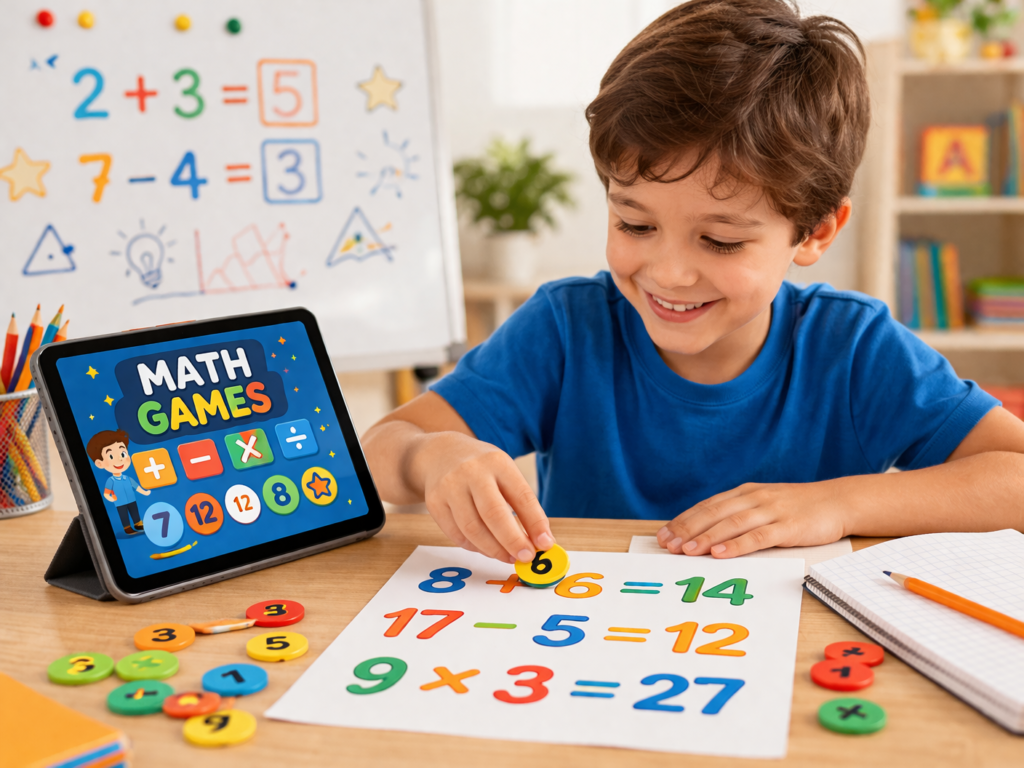
Math doesn’t have to feel boring or difficult. With the right approach, kids can learn math while having fun. Math games are a simple way to make learning more engaging and help children build strong number skills without pressure.
Instead of long study sessions, short and interactive games can make a big difference. They help kids stay focused, improve memory, and become more confident with numbers.
Why Math Games Work So Well
Math games turn learning into something active instead of passive. Instead of just reading or memorizing, kids solve problems, make quick decisions, and stay involved.
This makes it easier to understand concepts and remember them. It also helps reduce the stress that often comes with traditional math practice.
Build Strong Foundations Early
For younger kids, math games are a great way to build basic skills like addition and subtraction. These are the foundations for everything that comes later.
Once kids are comfortable with the basics, they can move on to multiplication and more complex problems at their own pace.
Make Practice Feel Like Play
One of the biggest advantages of math games is that they don’t feel like studying. Kids are more likely to practice when it feels like a game instead of a task.
Short sessions are especially effective. Even a few minutes a day can help build consistency and improve skills over time.
Use Different Types of Math Games
There are many types of math games that can help children improve:
- Quick calculation games for speed and accuracy
- Multiplication tables practice
- Memory games that involve numbers
- Mixed math challenges that combine different operations
Using a mix of these keeps things interesting and helps develop different skills at the same time.
Improve Focus and Thinking Skills
Math games don’t just improve math ability. They also help with focus, attention, and problem-solving.
When kids practice regularly, they become faster at recognizing patterns and solving problems in their head.
Keep Practice Simple and Consistent
The most important thing is consistency. Kids don’t need long sessions to improve. Practicing a little every day is much more effective.
Using tools like a mental math trainer can help make practice structured and easy to repeat daily.
Math Games Can Grow With Your Child
As kids improve, the difficulty of the games can increase. This keeps them challenged without making things frustrating.
Over time, they can move from simple exercises to more advanced mental math practice that improves both speed and accuracy.
Final Thoughts
Math games are one of the easiest ways to help kids enjoy learning and build strong skills at the same time.
With short daily practice and the right type of games, children can become more confident, faster, and more comfortable with numbers.