
Improving your mental math doesn’t require long study sessions or complicated methods. What actually works is having a simple daily routine that you can stick to.
Even 5–10 minutes a day is enough to see real progress, as long as you stay consistent.
Why a Daily Routine Matters
Practicing randomly from time to time won’t give you the same results as a structured routine. A short daily session helps your brain stay familiar with numbers and improves your speed naturally.
The goal is not to do a lot at once, but to show up every day.
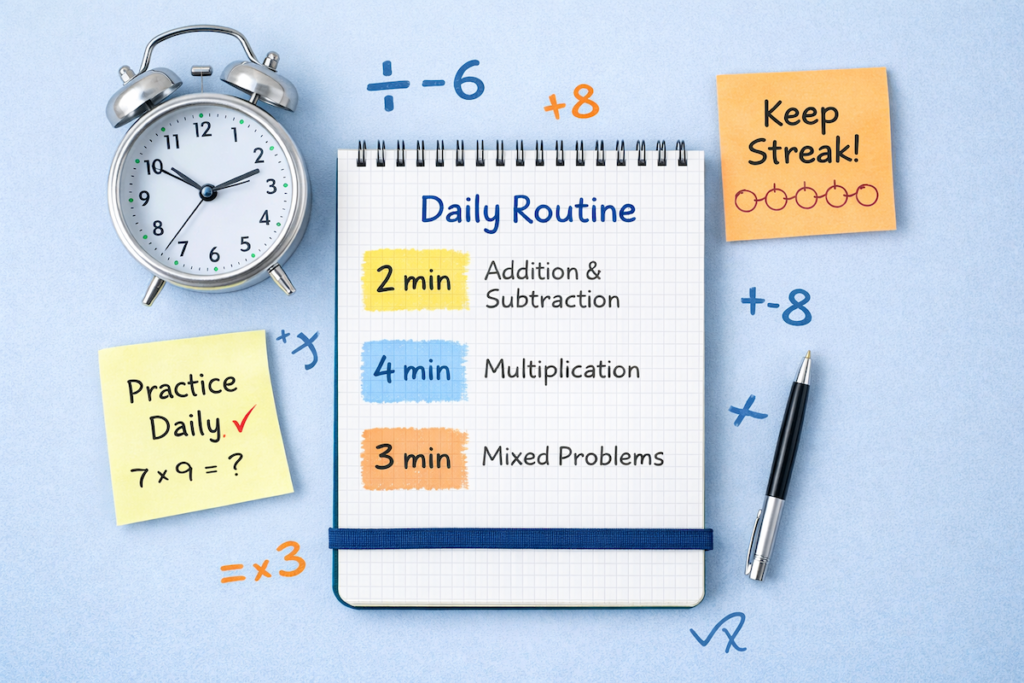
A Simple 5–10 Minute Routine
Here’s a practical routine you can follow:
- 2 minutes: Warm up with easy addition and subtraction
- 3–4 minutes: Focus on one operation (for example multiplication or division)
- 2–3 minutes: Solve mixed problems
This keeps your practice balanced without feeling overwhelming.
Not sure how to do those sums quickly? See how to add and subtract in your head.
Keep It Short and Focused
Long sessions can quickly become tiring and harder to maintain. Short practice keeps your focus high and makes it easier to build a habit.
If you stay consistent, these small sessions add up quickly.
Use Streaks to Stay Consistent
One of the easiest ways to stay motivated is to track your streak. When you practice every day, you build a chain that you don’t want to break.
This simple idea can make a big difference in staying consistent over time.
Practice at the Same Time Each Day
Try to practice at the same time every day. This helps turn mental math into a habit instead of something you have to think about.
For example, you can practice:
- In the morning before starting your day
- During a short break
- In the evening as a quick mental workout
Make It Slightly Challenging
Your practice should not feel too easy, but it also shouldn’t feel frustrating. A small challenge keeps your brain engaged and helps you improve steadily.
As you get better, gradually increase the difficulty.
Mix Different Types of Practice
To keep things interesting, switch between different types of mental math exercises and problem types.
This helps you stay engaged and improves your ability to handle different situations.
Use Tools to Make It Easier
Having a structured system makes it easier to follow your routine. A mental math trainer can guide your sessions and keep track of your progress automatically.
You can also try different types of mental math practice depending on your goals.
Don’t Worry About Perfection
Some days will be easier than others. The goal is not to be perfect, but to stay consistent.
Even a short session is better than skipping a day.
Final Thoughts
A simple daily routine is one of the most effective ways to improve mental math. Keep your sessions short, stay consistent, and gradually increase the challenge.
Over time, you’ll notice that calculations feel faster, easier, and more natural.
Coming back to maths as an adult? Read how adults can get faster at mental math.