
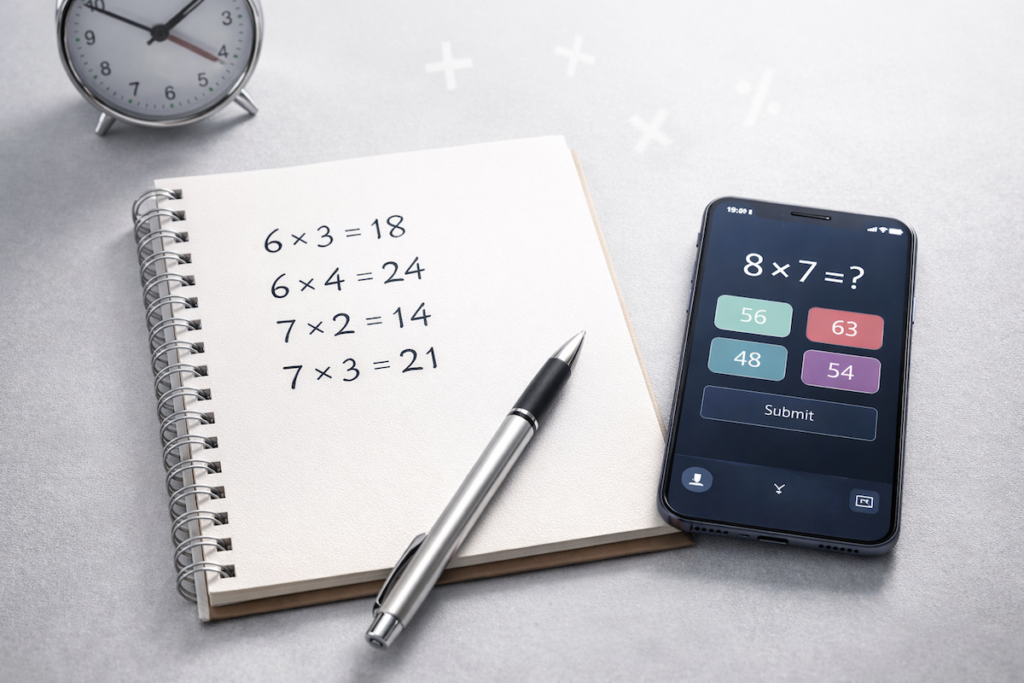
Learning multiplication tables can be much easier than it seems. With a few simple strategies, you can memorize them faster and understand how they work.
Whether you’re just starting or trying to improve your speed, a few simple techniques can make a big difference.
Why Multiplication Tables Matter
Multiplication tables are the foundation of mental math. Once you know them well, many calculations become much easier and faster.
They help with everyday math, improve problem-solving skills, and make more advanced topics easier to understand.
Start with Smaller Numbers
Don’t try to learn everything at once. Begin with smaller tables like 2, 3, 4, and 5. These are easier to understand and help you build confidence.
Once you’re comfortable, move on to higher numbers step by step.
Look for Patterns
Multiplication tables are full of patterns that make them easier to remember.
- The 5 times table always ends in 0 or 5
- The 9 times table follows a clear pattern (for example 18, 27, 36, 45)
- Even numbers repeat predictable sequences
Recognizing these patterns reduces the amount you need to memorize.
For all 144 facts in one place, see our times tables chart.
Practice a Few Minutes Every Day
Short, daily practice works much better than long sessions once in a while. Even 5–10 minutes a day can lead to steady improvement.
You can follow a simple mental math practice routine to stay consistent.
Use Repetition and Recall
Reading multiplication tables is not enough. You need to actively recall the answers.
Try:
- Covering the answers and testing yourself
- Saying answers out loud
- Writing them down from memory
This strengthens your memory and makes recall faster.
Mix Multiplication with Mental Math
Once you know the basics, start using multiplication in real calculations. This helps you apply what you’ve learned and improves your overall mental math skills.
You can also combine this with different mental math exercises to make practice more effective.
Our mental math tricks show how to put the tables to work.
Use Games and Interactive Practice
Practicing multiplication doesn’t have to feel repetitive. Games and interactive challenges make learning more engaging and easier to stick with.
This is especially helpful for kids, but adults can benefit from it too. If you’re looking for ideas, check out these math games for kids.
Focus on Progress, Not Perfection
You don’t need to memorize everything perfectly right away. Focus on gradual improvement and keep practicing regularly.
Over time, the answers will come naturally without thinking.
Final Thoughts
Learning multiplication tables fast is all about consistency, repetition, and using simple techniques. Start small, practice daily, and use patterns to make things easier.
With regular practice, you’ll notice that solving problems becomes quicker and more automatic.